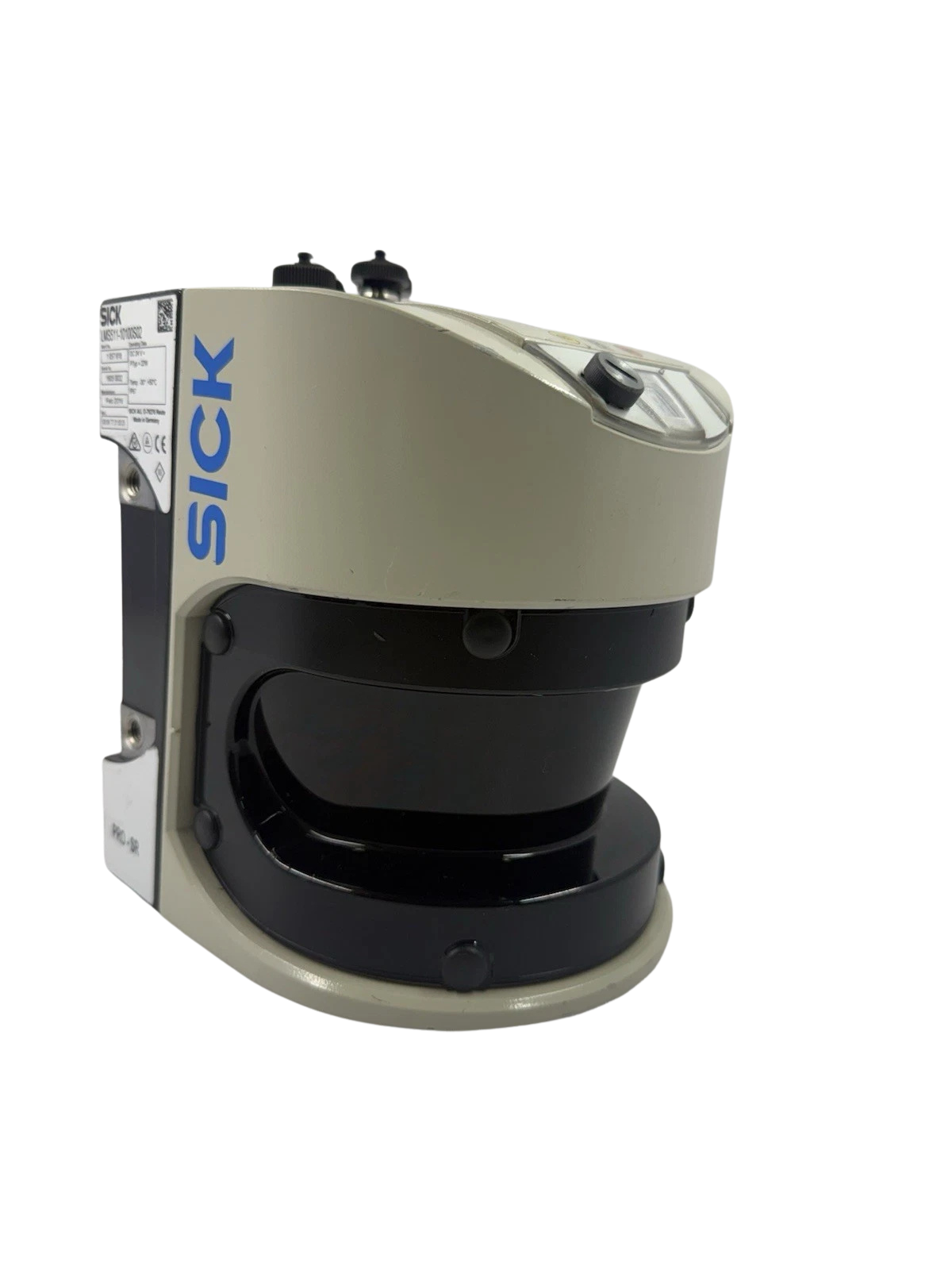
LiDAR for Harsh Environments: SICK LMS511-10100S02 The SICK LMS511-10100S02 is a LiDAR sensor designed for outdoor applications. Using modern multi-echo technology, it filters out external noise such as precipitation or steam, guaranteeing that the signal returned is from the intended target. Its 270° field of view and long-range capabilities make it the best option for perimeter security, port crane positioning, and industrial vehicle automation. As a marine engineer with experience integrating scanning systems into port automation and vessel docking projects, I can verify that the SICK LMS511-10100S02 (MPN: 1057618) is the gold standard for outdoor reliability. This is more than just a sensor; it’s a ruggedized 2D LiDAR system designed to maintain precision even when rain, fog, or dust would otherwise obscure the view. Technical Specifications Feature Specification Model Name LMS511-10100S02 Part Number (MPN) 1057618 Scanning Angle 270° Operating Range 0.5 m to 80 m (at 10% remission: 26 m) Angular Resolution 0.167° / 0.25° / 0.333° / 0.5° / 1° (configurable) Response Time ≥ 10 ms Laser Class 1 (IEC 60825-1:2014, eye-safe) Enclosure Rating IP67 Operating Temp -30 °C to 50 °C Data Interface Ethernet, RS-232, USB Key Features: Five-Echo Technology: This sensor can process up to five echoes every pulse, allowing it to see through rain, snow, and dust, providing unparalleled outdoor reliability. Internal Self-Heating: With an internal heater, the LMS511-10100S02 performs flawlessly in sub-zero temperatures, preventing lens icing. High Angular Resolution: With a resolution of 0.167°, it produces dense point clouds for accurate object profiling and measurement. Field Evaluation Software: With SICK’s SOPAS ET software, you can design up to ten configurable fields for sophisticated intrusion detection or collision avoidance. Ultra-Rugged Housing: The IP67-rated housing and shock-resistant construction assure a long life in harsh industrial or maritime situations. Our Engineers’ Guidance: When installing the LMS511 in coastal or high-vibration environments, always use a stainless steel mounting bracket to prevent galvanic corrosion. Additionally, while the five-echo technology is excellent, we recommend a weather hood for top-down installations to prevent water pooling on the optics, which can distort the beam over long distances. For data integrity, ensure you are using shielded M12 Ethernet cables to mitigate electromagnetic interference from nearby heavy machinery.